
Helping children in heal and express their feelings
Children always do not have words to explain what they are feeling now. A child can feel worried, angry, sad and confused but he may not know how to explain these feelings. Instead of this, children often express themselves by playing. That is why play therapy can be helpful for children who are experiencing emotional, behavioral, social and development difficulties.
Play therapy uses toys, games, drawing, telling stories, role play and other playful activities to create a safe environment where children can express their feelings. With the guidance of a trained therapist, play becomes more than entertainment. It can become a way for children to communicate, understand their emotions, develop skills and work through different experiences.
What is play therapy?
Play therapy is a form of counseling which is especially designed for children. In it play is used as a natural method of communication and learning.
During play therapy, a therapist provides toys and activities according to their age that encourage the child to express feelings and situations. Depending on the needs of the child, activities may include drawing, block buildings, playing with dolls or puppets, making stories, using art materials, playing board games or participating in imaginative role play.
Therapists observe the child’s behavior and interact with them in a supported way. With time, children feel more comfortable expressing emotions and discussing experiences which are difficult to explain directly.
How does play therapy work?
Play therapy works by creating a safe and supported space where children can express themselves without judging feelings. Therapists chose activities based on age of child, personality, development level and difficulties. For example, a child who has difficulty in talking about anxiety can use dolls to express the situation which makes them nervous. Another child can draw pictures to express sadness or anger. Through these activities, therapists can better understand a child’s problem and help them in developing healthy ways to respond.
Play therapy can also teach children essential skills. They can learn how to find emotions, solve problems, communicate with others, manage frustration, make decisions and face stressful situations.
The goal is not simply to see a child play. Therapists use play as a part of the healing process.
Why is play important for children?
Play is an important part of development. By play, children can learn about themselves and the world around them. They practice communication, creativity, making decisions and solving their problems.
Play also gives a chance to children to experiment with different roles and situations. For example, a child playing with a toy doctor can express feelings for going to hospital. A child who uses puppets can recreate arguments between his family. These activities can provide clues about what the child can be experiencing.
Because play is familiar and enjoyable, children can feel more comfortable participating in therapy. Instead of expecting to sit and answer a set of questions, they can communicate in a way that feels natural for them.
Play Therapy Activities at Home
Parents can help improve their children’s emotional growth through daily play. We know that activities done at home are not a replacement for professional therapy. But activities at home can help children communicate better and help in their emotional development.
The time small children spend playing together can also be valuable. Following the games that children are interested in and listening to them carefully can further help in building children’s confidence and bonding.
Parents should avoid seeing every toy as a hidden psychological message. The games that children play can have many meanings.
When should parents seek professional help?
Sadness, frustration, fear or difficult behaviour in childhood is an important part of childhood. When a child’s emotional or behavioural difficulties are continuous, then parents need professional advice. The child’s emotions affect home life, friendships, education, sleep, and daily activities. Parents need professional help in many other situations as well, such as when a child has witnessed an incident that has had a strong impact on the child’s mind. Or when parents have any concern about the child’s safety.
Play Therapy
Play therapy helps children who face emotional, behavioral, or social challenges like anxiety, anger, sadness, or family changes. A trained expert decides if it is right for the child.
Types of Play Therapy
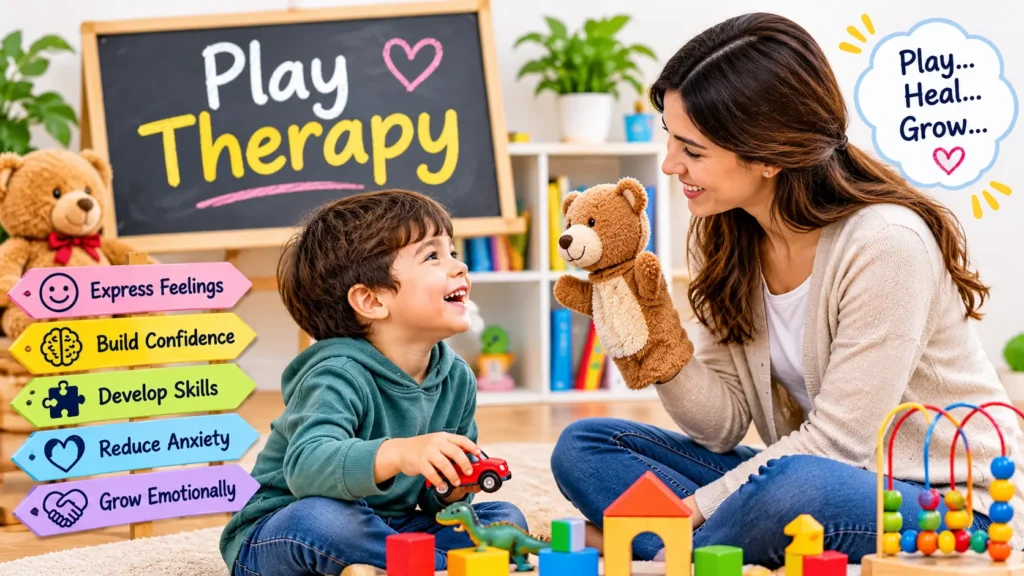
Child-Centered Play Therapy
The child chooses the toys and activities while the therapist follows their lead in a safe space.
Directive Play Therapy
The therapist picks specific activities, like stories or role-play, to target certain issues.
Combined Approach
Some therapists mix both methods based on what the child needs.
What Happens in a Session?
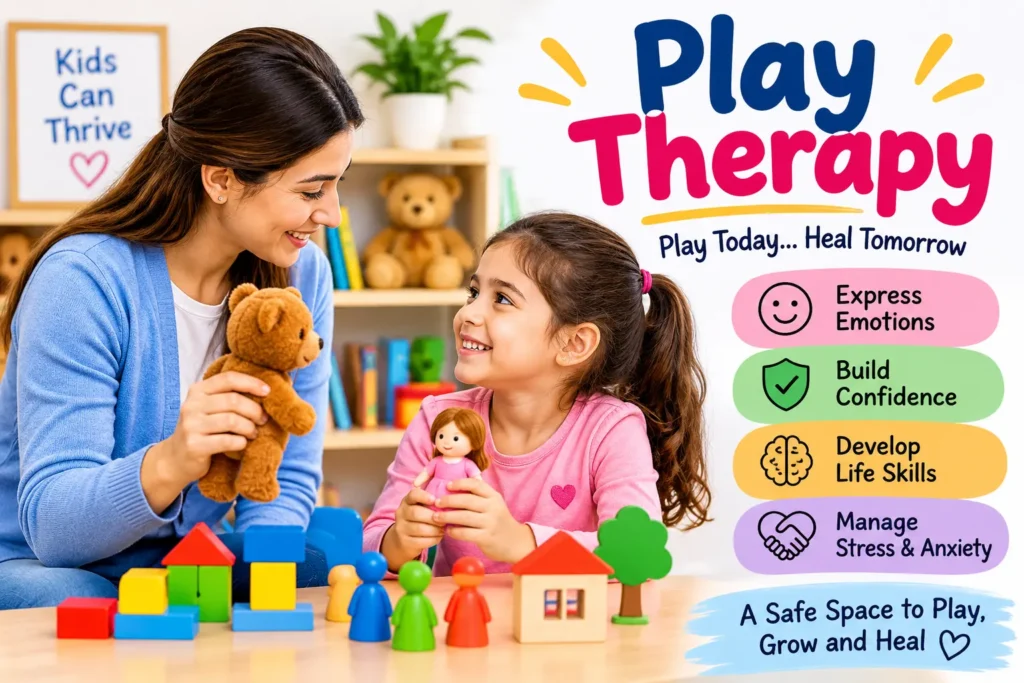
Safe Space
The room has toys, games, art supplies, and puppets.
Building Trust
The therapist first builds a friendly bond so the child feels secure.
Observation
The therapist watches the child play to understand their hidden feelings and thoughts.
Key Benefits of Play Therapy
Expresses Emotions
Helps children show feelings they cannot say in words.
Improves Communication
Teaches children how to share their needs.
Builds Problem-Solving
Games teach kids how to handle hard situations.
Helps Control Emotions
Teaches better ways to react to anger or fear.
Boosts Social Skills
Teaches sharing, waiting turns, and making friends.
Increases Confidence
Success in activities makes children feel stronger and more independent.
Offers Safety
Gives kids a trusted place to heal and feel accepted.
Conclusion
Play therapy recognizes one important thing that is related to a child’s childhood. Play is an activity in which children naturally meet and talk to each other and learn a lot, understand their world, and spend their childhood with good memories.
A good environment and good training, guidance from a skilled person, helps children develop coping skills, express emotions, and improve communication.
If parents, teachers, and caregivers understand the importance of play and see play from a child’s point of view, then this method can help improve children’s emotional development. When children are given opportunities in childhood to play, talk, and be heard, these opportunities help in their better growth. And when children grow up, they get help from it.